

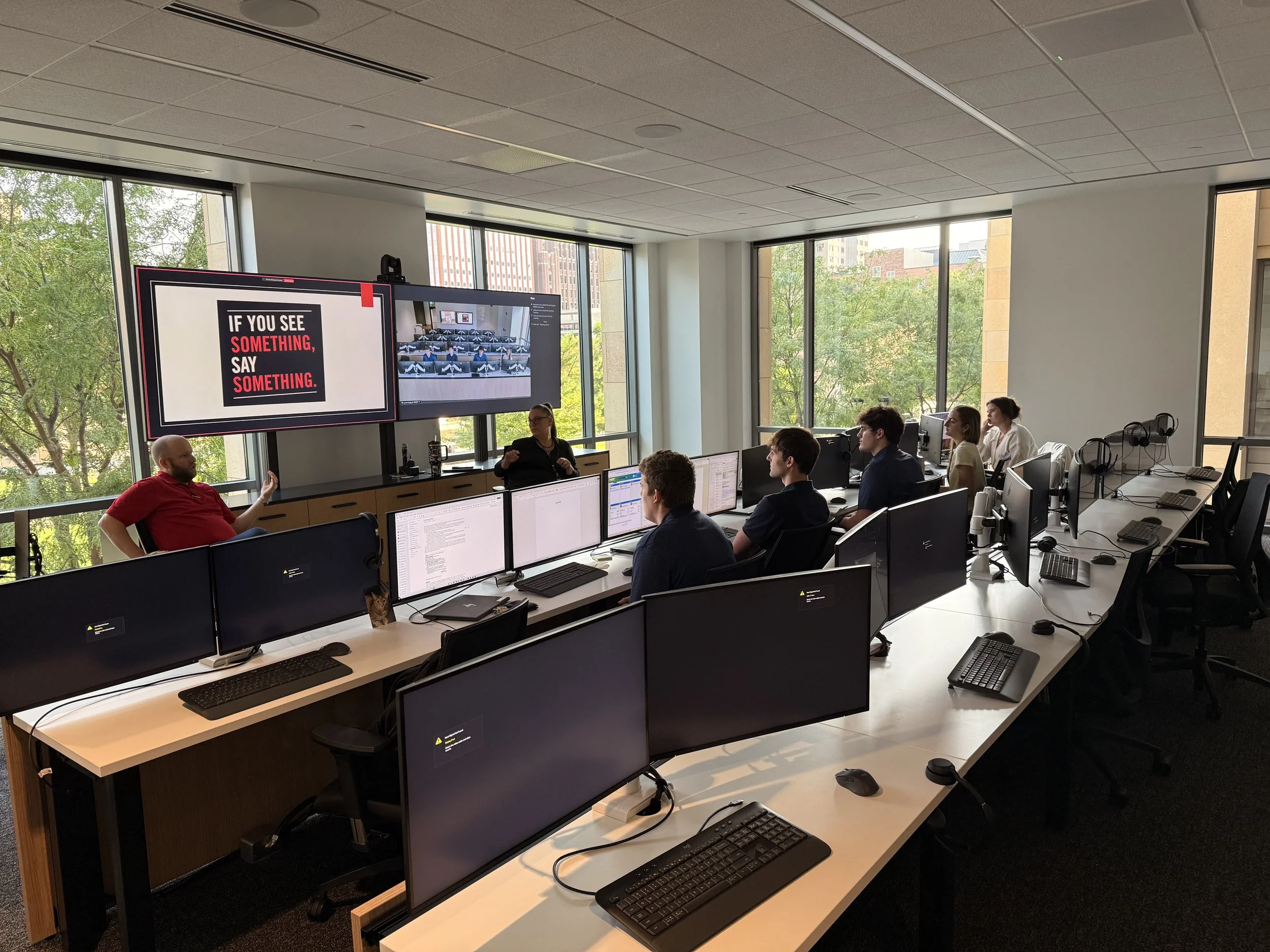
Department Audit Initiative & Training
Utilizing business analysis partnered with data analysis insights, I served as the Learning & Development project manager & partner for a company’s New Business leadership team to support them in achieving acceptable audit scores for issuing annuity contracts accurately.
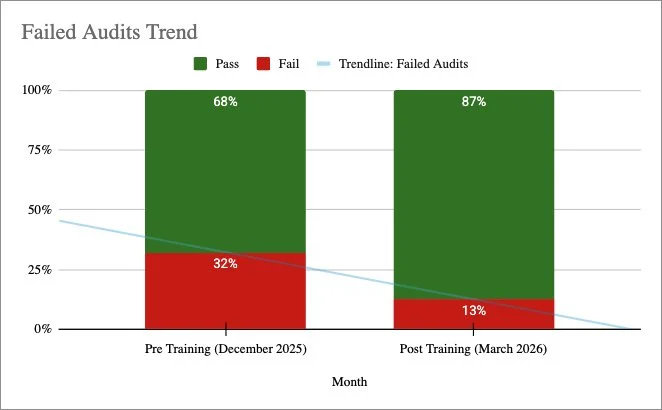
In December of 2025, new business processors were passing only 67.79% of the audits reviewed by the auditing team.
My Approach
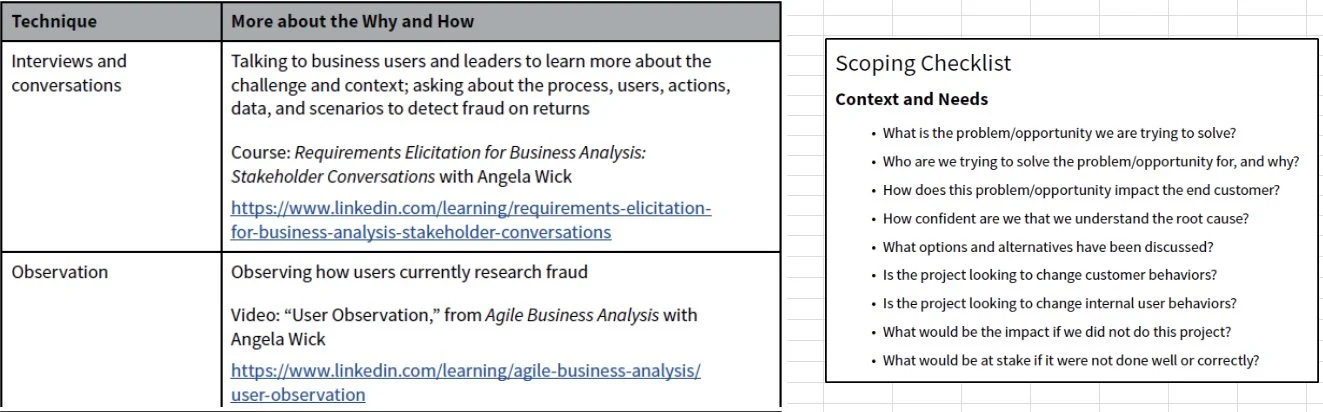
Interviews, Conversations & Observations
Simultaneously utilizing multiple process analysis techniques, I job shadowed processors & auditors independently from a ‘discovery’ point of view to gather knowledge on the current context of our issues with poor audit scores.
Through conversation & observation, I began to notice gaps in knowledge and trends within the processing errors.
Process Modeling
Through reviewing & testing of our current procedures, I found inaccurate and outdated information that had been misleading end users.
I edited & updated each relevant procedure in collaboration with SMEs, leadership, compliance & legal departments to ensure accuracy. I ensured each relevant process regarding these specific audits were addressed adequately in our SharePoint hub of procedures & made available to all end users.
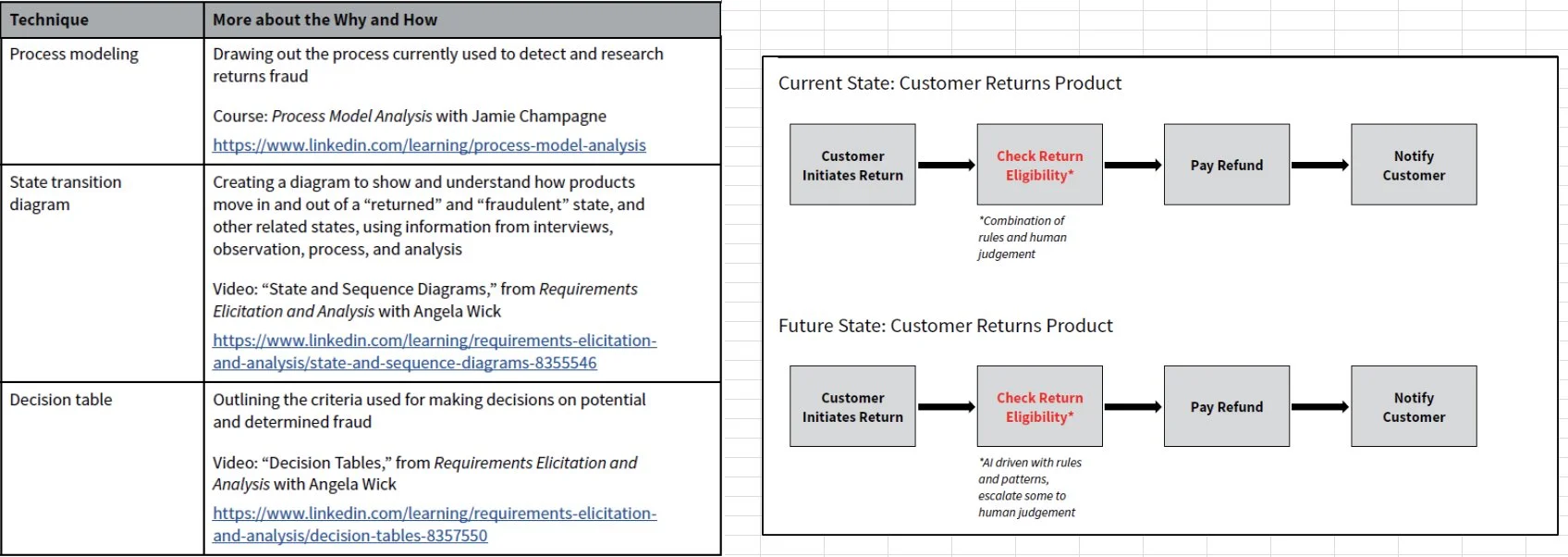
Decision Tables & State Transition Mapping
While updating the procedures, I also reviewed and revised every relevant job aid which included diagrams, tables and mind maps/flow charts for processes & procedures. The mind map especially became a valued resource to processors as it lived on one page, and clearly diagrammed the decisioning process of issuing an annuity contract.
Training
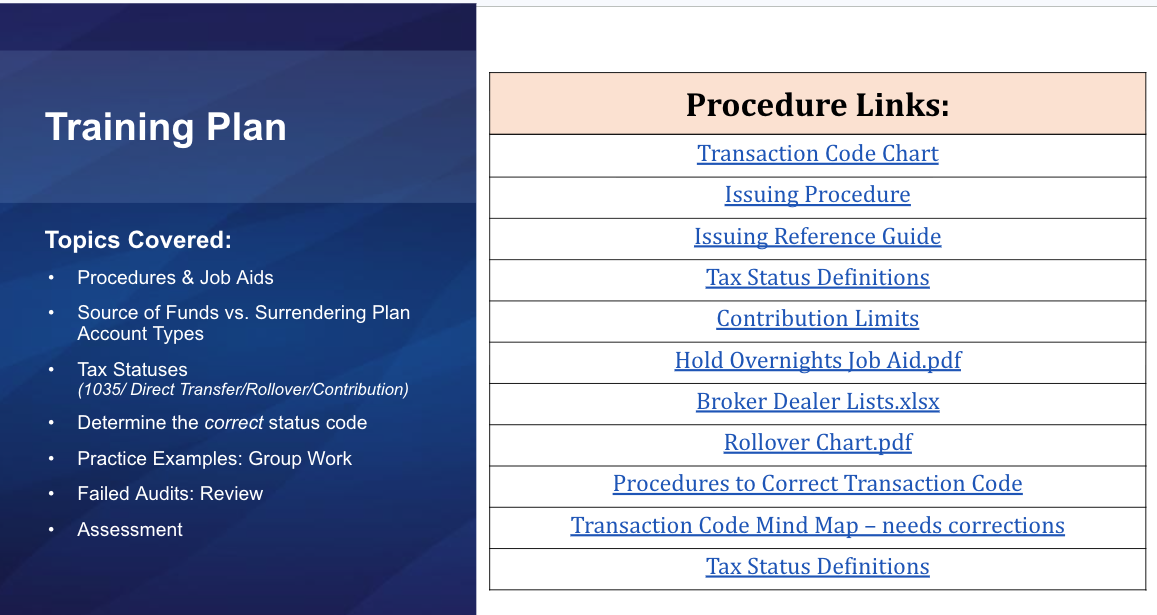
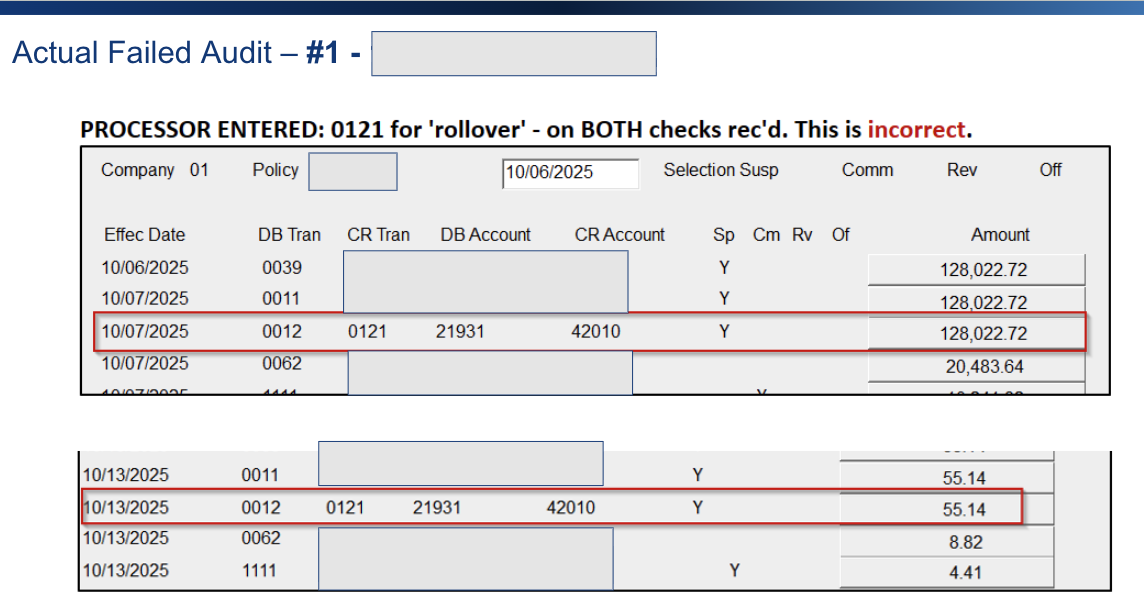
I used my instruction design skills and techniques to build out new and uniquely tailored learning content for this specific group of learners. Building on the updates to our procedures, job aids and process mind maps I was able to incorporate redacted examples of actual failed audits to review with the processors in training.
During the facilitation of training, we took a moment to step back and view the full scope of the learning gap. Overall, two majors things were true:
- Processors did not adequately understand the tax ramifications belied on the client when an annuity contract was issued incorrectly.
- Processors did not fully understand how to identify Qualified verses Non-Qualified incoming funds, resulting in inaccurate coding in the system upon issuance.
Empowering Learners to Improve through Intentional Design
A Fresh Start
Trainees had been onboarded at different times, and received varying training experiences. Some trainees in this group were well-seasoned employees with more than 15 years at the company, and even they were making these errors. Others were onboarded within the previous year, and still learning.
This created a unique opportunity for me to apply my curriculum & instruction experience from my years as a certified educator.
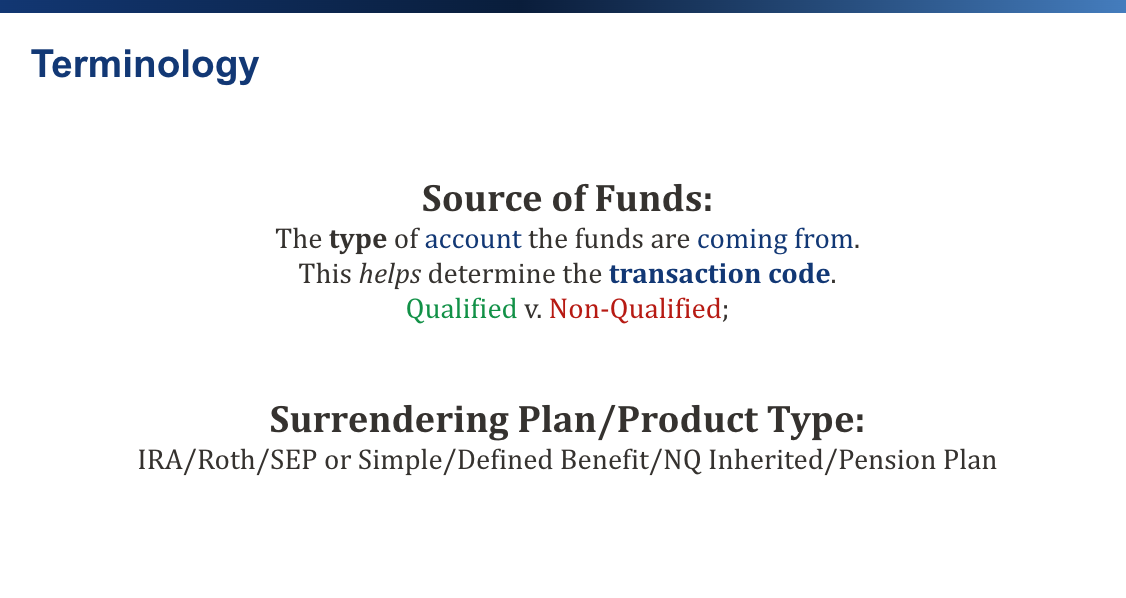
I approached this training as a ‘refresher’ course for all team members, and began with a review of terminology used in the industry that may be causing confusion amongst the team, as I had noticed some terminology repeatedly referenced in separate scenarios that was not 100% accurate or true to the term.
Real World References
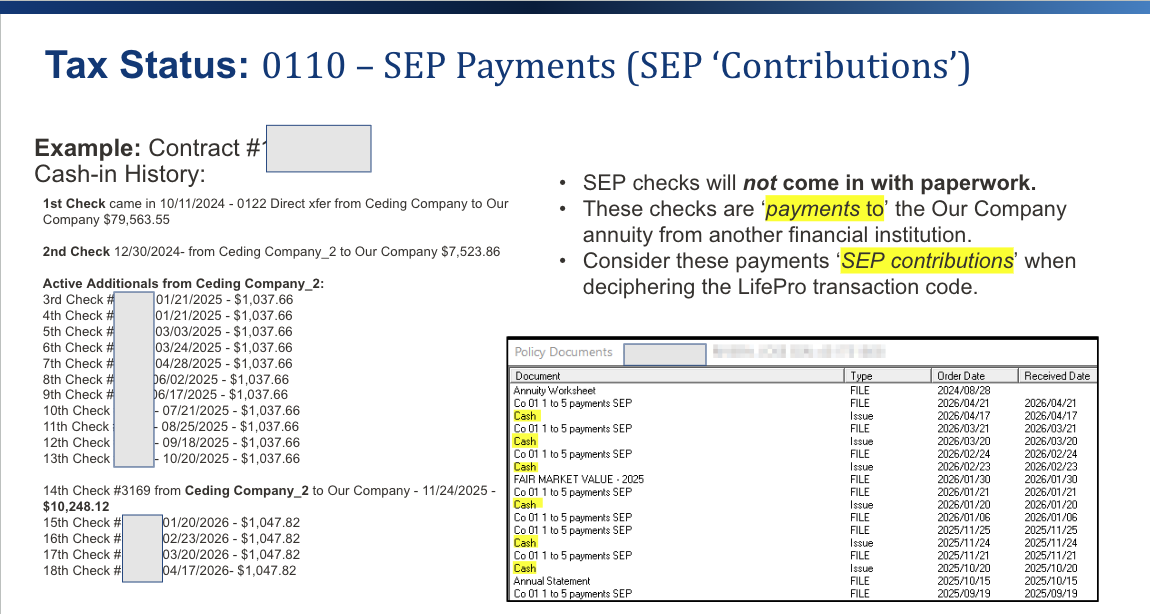
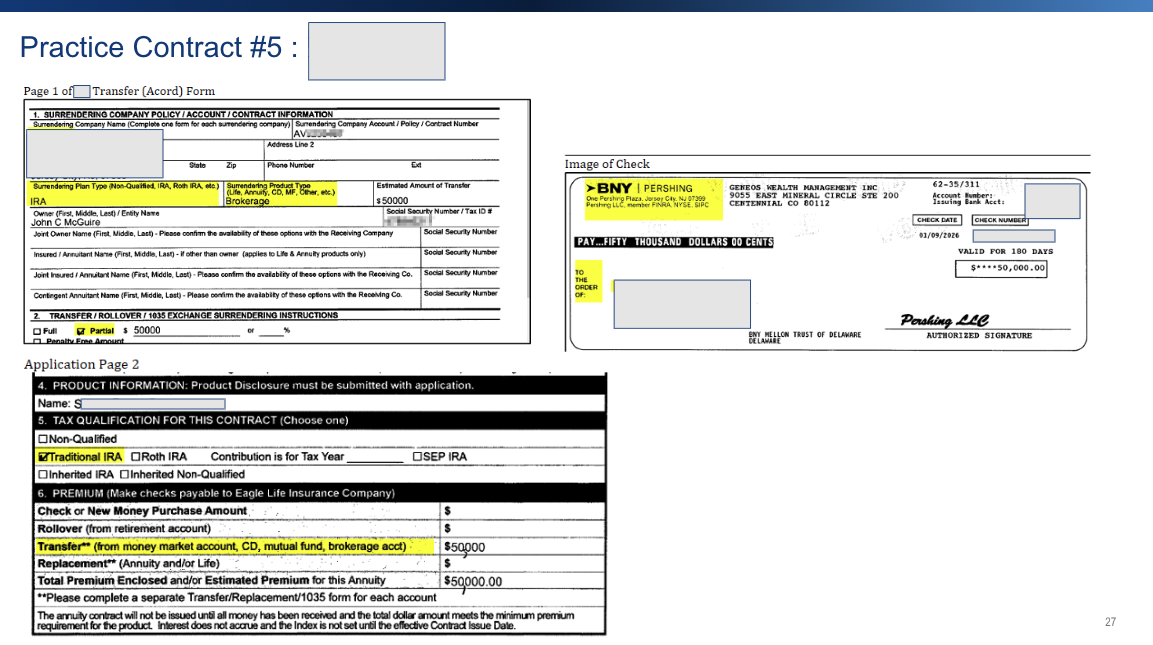
Referencing previously failed audits, I pulled real-time examples for the trainees to review, discuss and re-work as a team. A type of ‘second chance’ to come to the correct conclusion.
I pulled out artifacts such as check images and relative information from application data to assist the processors in coming to their conclusion on the correct transaction code to apply for this contract issue.
Real World Application
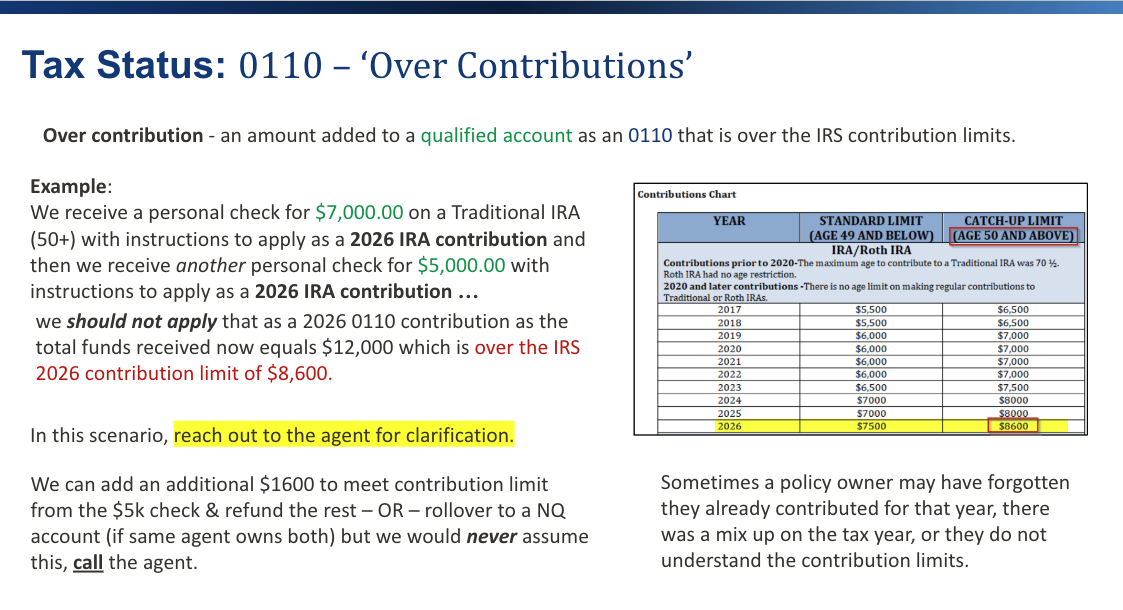
I created examples of real-world scenarios to support the learner’s understanding as to why it was critical for them to understand the tax status definitions as defined by the IRS, and how Our Company understood, communicated and processed annuities with varying tax statuses.
Review & Reinforce
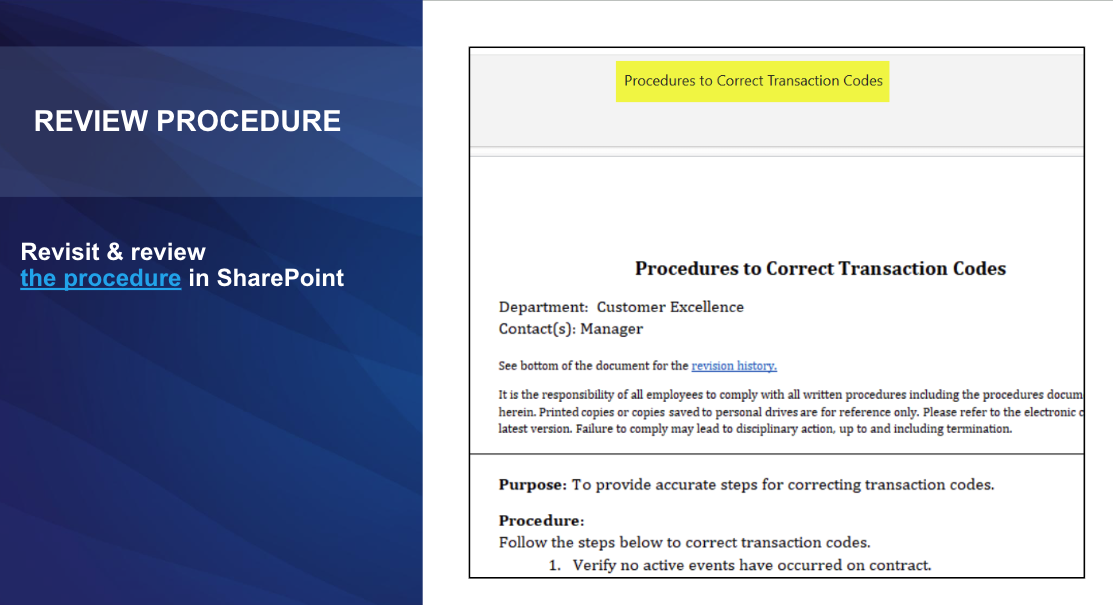
I reviewed navigational instruction on locating company procedures and job aids, and supported learners in creating organization within their daily tasks.
Analyze & Redirect
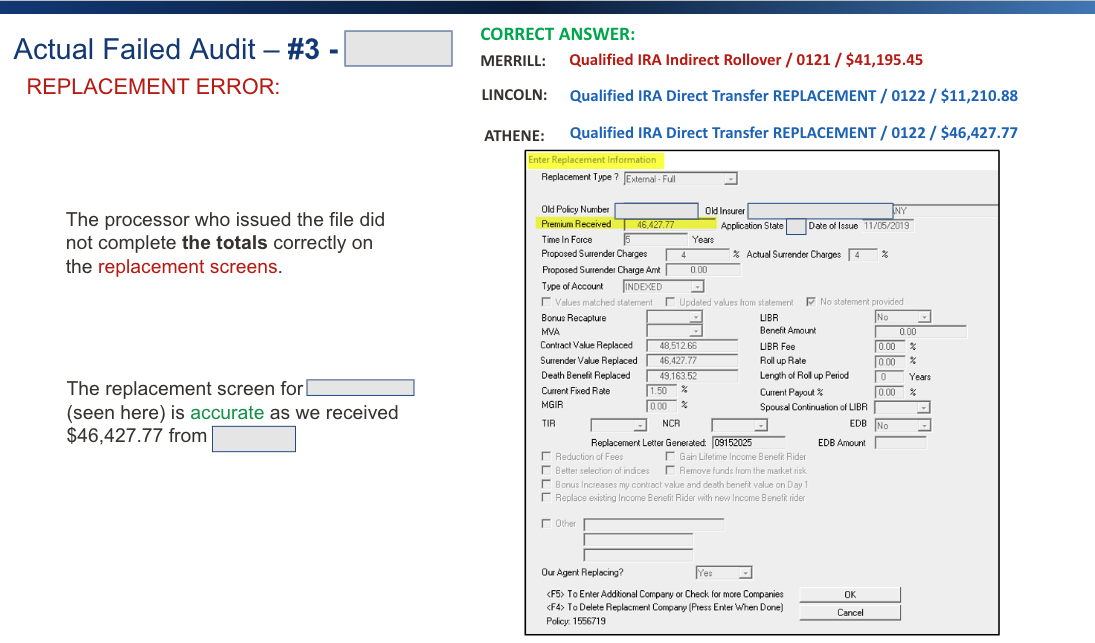
I provided the correct answers for each real-world example I had the trainees re-work. When answers were inaccurate, we broke down their process in coming to their conclusion, and located the root cause of the error.

Instructional Design & Implementation
Meets Differentiated Education with Measurable Results
The training was a week long learning path, with office hours available as post-training support the following weeks.
The next quarter audit results for this same team of processors showed the success of my training approach, design & facilitation.
This team of processors went from passing only 68% of their audits for this task to an improved 87% rate of passing audits within ONE fiscal quarter.